 |
 |
 |
 |
 |
 |
 |
|
 |
 |
 |
 |
 |
 |
||
|
|
|
|
|
|
|
|
|
|
|
|
|
|
||
 |
 |
 |
|||||
| This is an ongoing study of the life of Susanna Roope Dockery and her paintings. | |||
|
Susanna was born in the Roope family home in Oporto on 13th February 1856. A few years later the family acquired the Quinta Amarela in Oporto, a house long gone and the area is now known as Jardim de Marquês. She was the fourth child of Cabel (1823-1880) and Elizabeth (1828-1902) Roope. Cabel Roope was a son of another Cabel Roope, a member of a prominent family long settled in the Dartmouth area of South Devon who had become part of the small British community in Oporto as a partner in the port firm Hunt, Roope & Co. Her mother Elizabeth (known as Maria) Whitaker was from a long-established family in Bampton, Oxfordshire.
 Extracted from the website: https://portosecretspots.com. Susanna Roope grew up in Oporto and was married in Oporto on 21st May 1878 to Alfred Victor Dockery, previously US Consul at Oporto, but subsequently based at the US Consulate in Leeds, England. She moved to Leeds where their first child Roderick was born in 1879, followed by twins George and May in 1883. In 1885 however Victor's consulship was terminated and they moved to Carthage in Moore County, North Carolina, fairly close to Victor's family home in Richmond County. In 1891 Susanna parted from Victor and sailed for England with the children. There is little evidence of her painting while she was with her husband, either in Leeds or during the years she lived in America. She settled with her mother Maria Roope in a house at Witley in Surrey and we assume this was her principal home for the next few years. Susanna's mother later moved to Guildford and passed away in 1902 and it is assumed that around this time Susanna moved permanently to Portugal. Back in 1891, she had started associating with other artists in the area of Haslemere, such as Claude Hayes R.I., the son of Edwin Hayes, the marine painter and member of the Royal Hibernian Academy and it appears, to sustain herself financially, she started painting professionally. At this stage it is worth mentioning Jonathan Rawes' (my cousin) book, the family background of Susanna called, Different Worlds, published in 2024, a useful source for Susanna's movements and the world in which she lived.
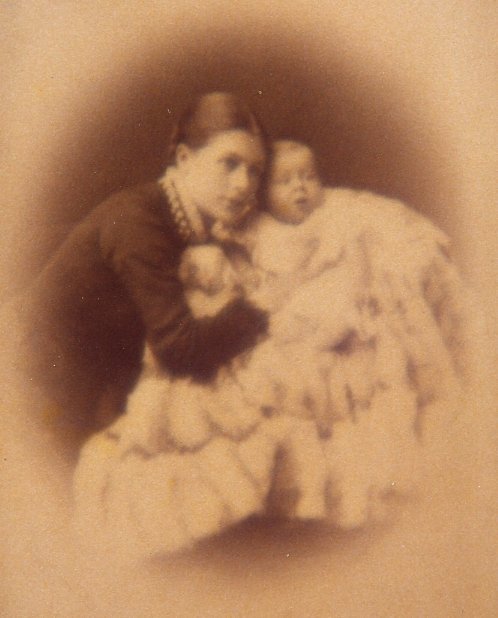
Susanna with Roderick in 1879.
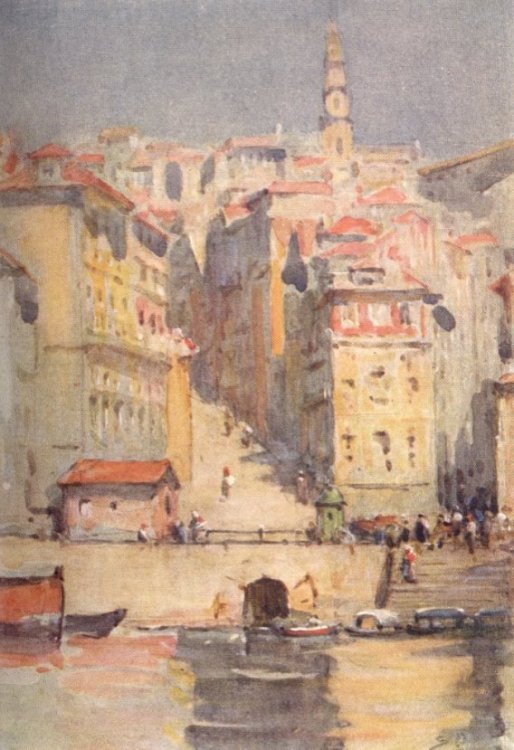
1891 - 1902 - Surrey and Portugal While she was visiting Portugal, it is assumed that she stayed with her extended family, particularly her brother Cabel, who ran Hunt Roope and Company, and used them as bases to explore local surroundings. Some of her paintings during these years however were much further afield, such as the National Palace of Pena at Sintra, east to Pinhão up the Douro and north to the town of Viana do Castelo, or villages further north such as Afife or Coura or on the Rio Minho at the Spanish border.
Susanna's exhibitions
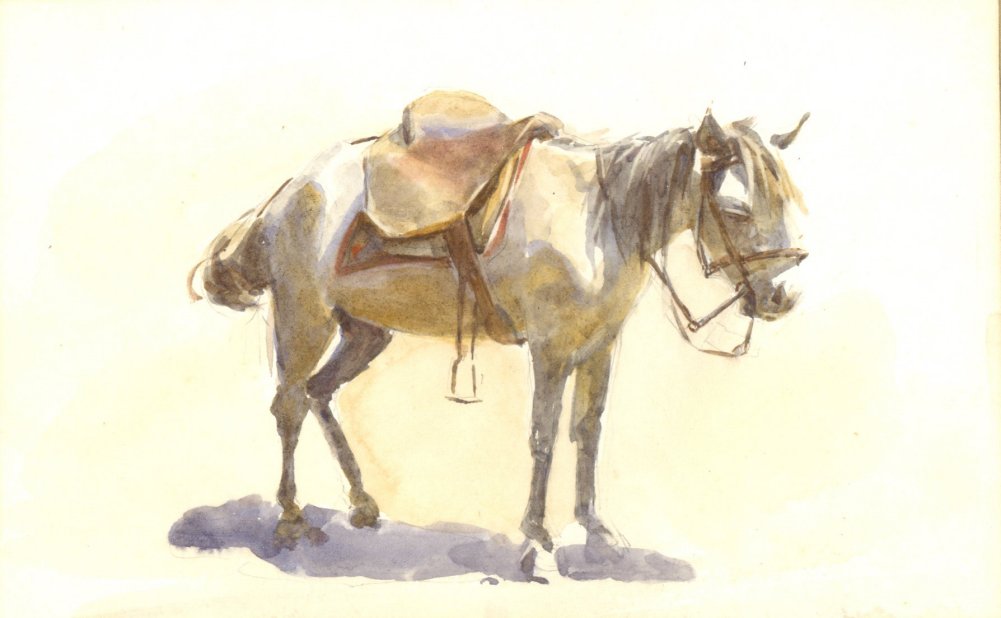
At the turn of the century Susanna and her larger Roope family stayed at Viana do Castelo in the Minho. Her niece Elsie Standring left a diary that recorded this event (see elsewhere on this site). It writes of much walking, horse riding and also visiting the village of Afife and gives us a lovely window into her world. This was certainly not her first visit to the north however as several of her paintings in the exhibition of 1897 were of scenes in the Minho. She had obviously fallen in love with the Minho and perhaps in particular Afife where she rented a cottage, presumably for a number of years. The cottage was adjacent to the railway line and main road and close to the little station at Afife. Many of her sketches and paintings are of harvesting and winnowing and rural life around Afife and were probably painted during this time. Her last known exhibition was in 1909 when she exhibited in London at the Clifford Galleries. The same year saw the publication of Portugal, its Land and People by W.H. Koebel, which contained 21 of her paintings, in which we get the full impact of her finished works.
1902 - circa 1912. Susanna would have probably known all these places by the time she moved back to Portugal. One port of call however was the quinta de Eira Velha, above Pinhão, on the upper reaches of the Douro. While at Eira Velha, she painted many scenes of grape harvesting and assorted processes which went into the production of port wine. She clearly used this house as a base, not only for painting, but for sightseeing etc. The quinta however was not particularly suitable to women. It was rough, hard and bitterly cold in the winter and very hot in the summer.
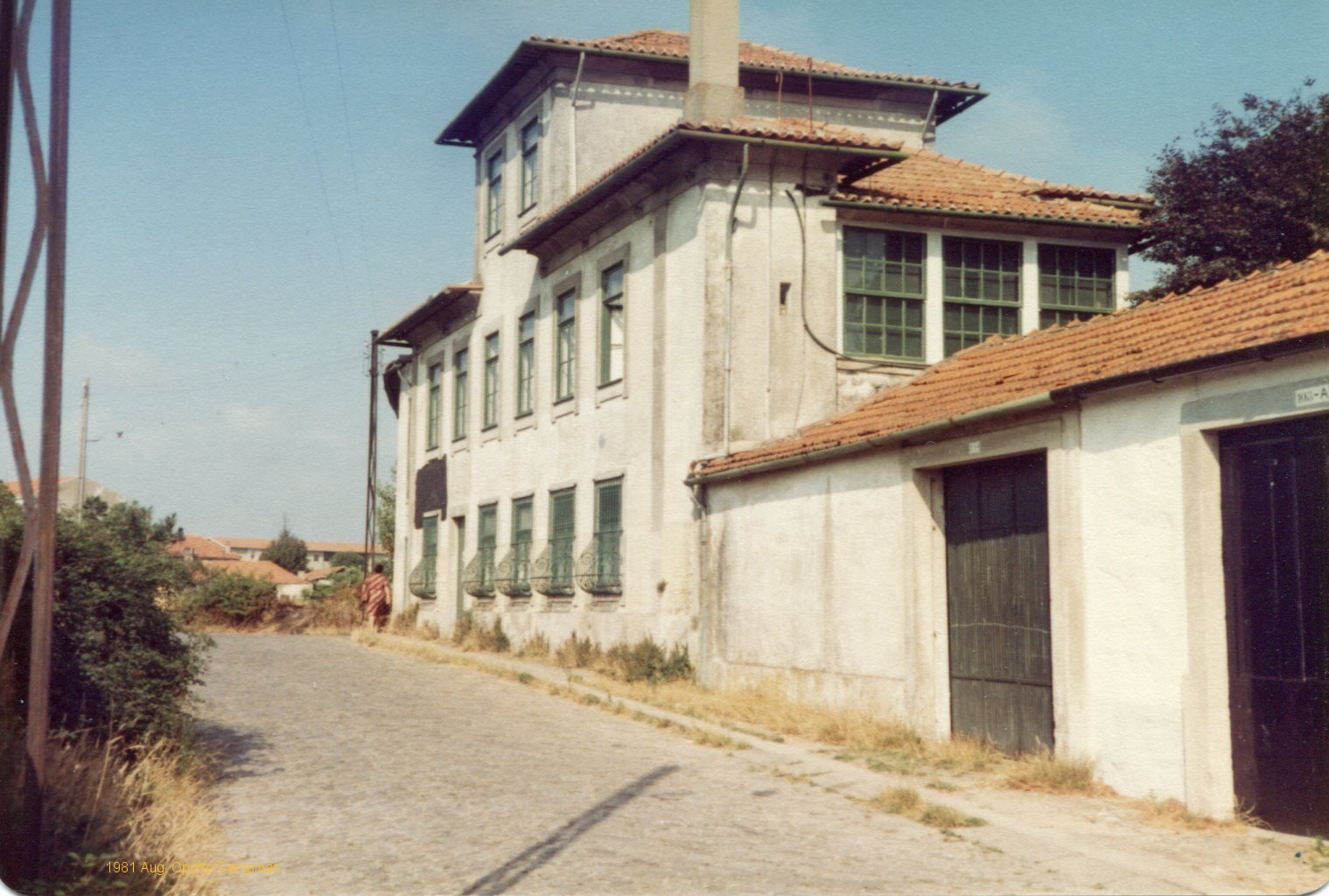
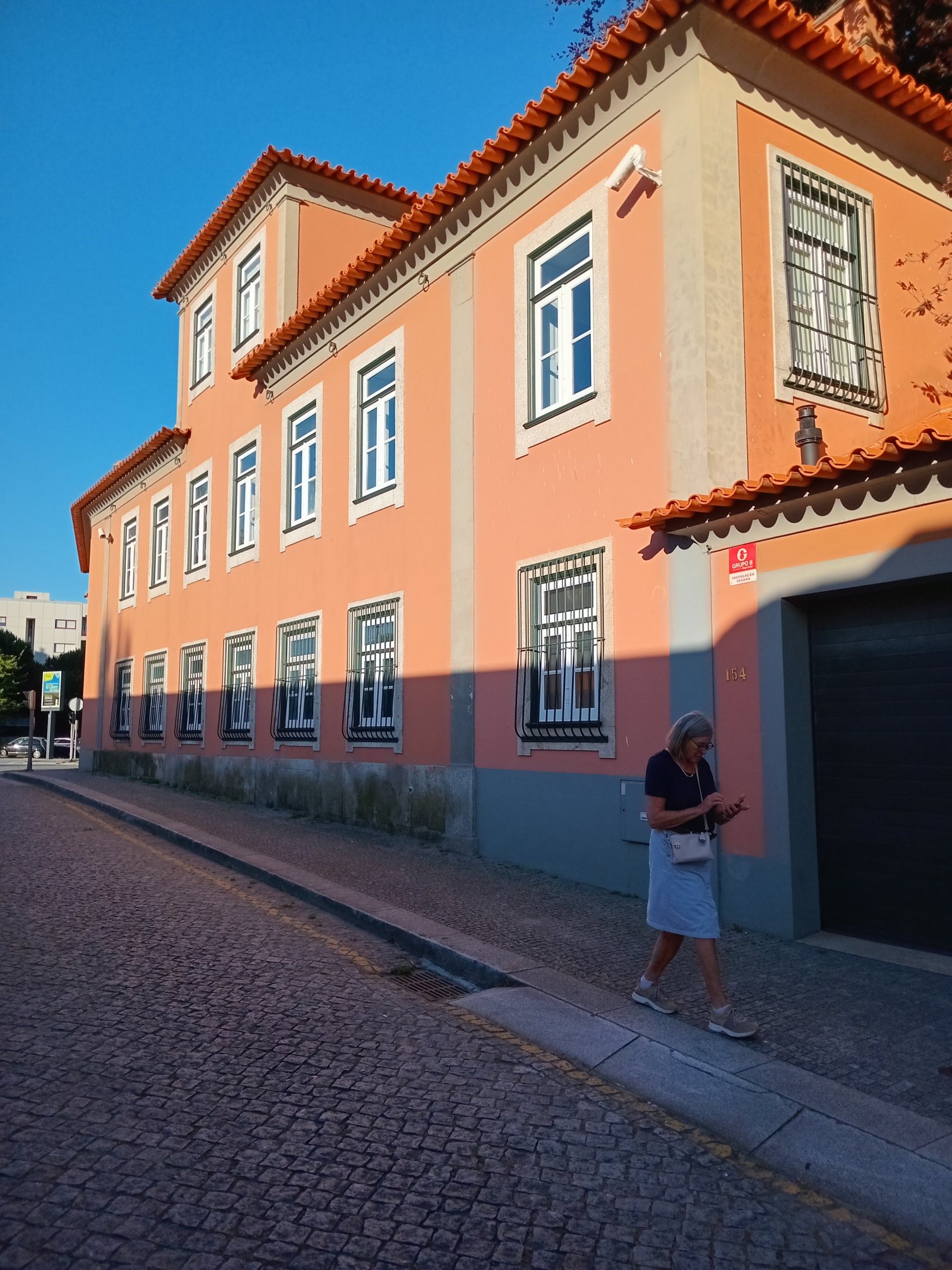
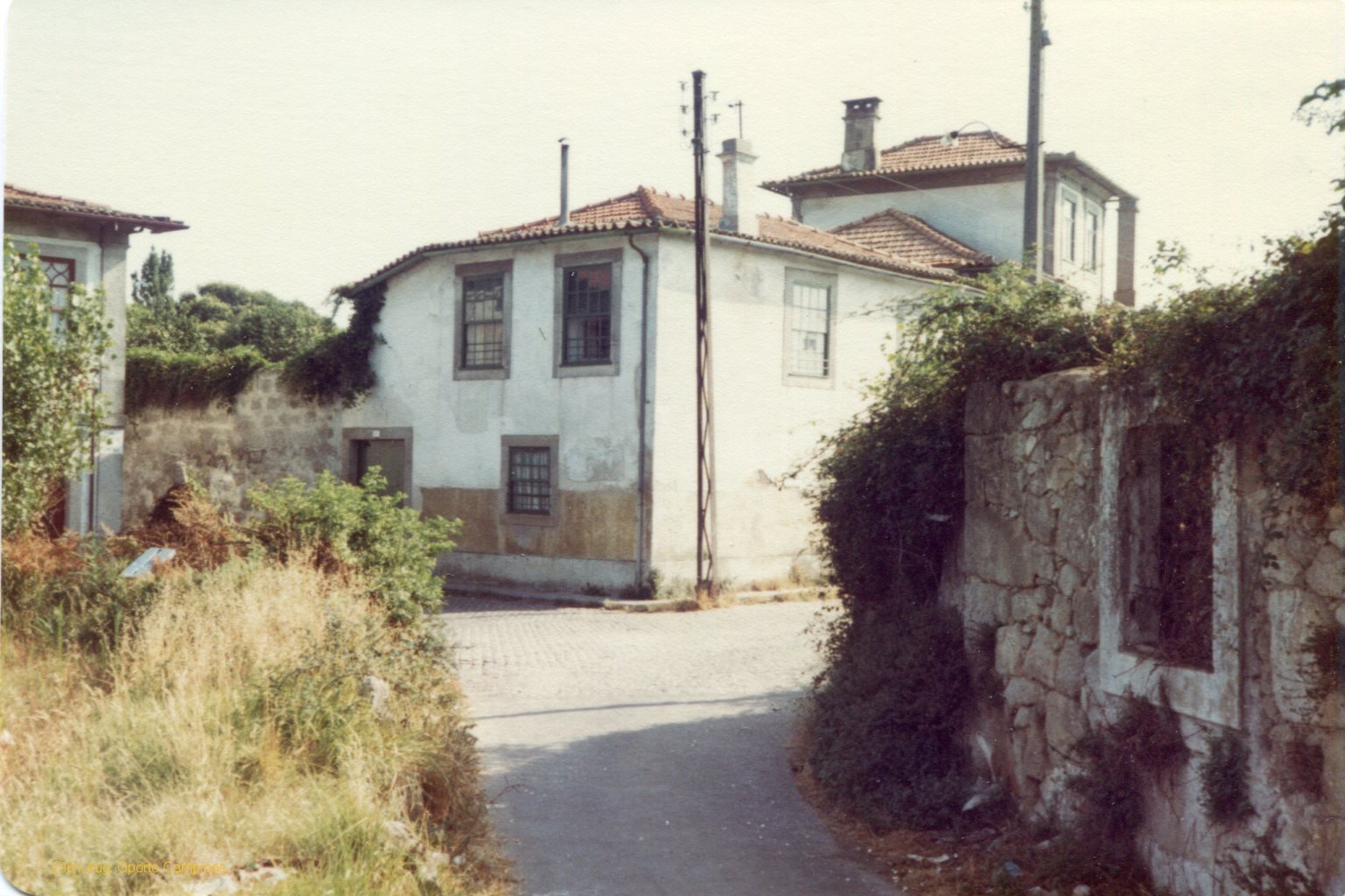
circa 1911 - 1927 - Lavadores and Afife We fortunately have photographs of various Rawes/Roope houses from when my father Bernard visited Lavadores in 1981 & 1983. We can see the rustic cottage (232) which was presumably Susanna's first home in Lavadores. The cottage was close to other members of the family but, although my father Bernard photographed the cottage in 1981, it has not been traced so maybe it has now (2026) been demolished. Francis Rawes, Bernard's brother and the eldest of a family of four, was born in Oporto in 1916, presumably at the large Rawes family home in Campanhã. He published his memoirs privately in 2004 and wrote about his early life in Oporto, Lavadores and Afife before being sent to school in England in 1926. Susanna's sister Kate and brother-in-law Arthur Dagge lived in a large house (230) on Rua de Estempara de Lavadores, while opposite (240 & 241), lived Susanna's daughter May and son-in-law Prescott Rawes during the summer months; another photograph depicts Susanna's last home (234 & 235) and the Flower's house (234 & 235), once the home of the Roopes; they were both situated on the end of Rua de Bélgica - a grand position overlooking the sea. Unfortunately, we have few fixed dates. Into this mix we have to include Susanna's time in her cottage at Afife.
Photo 232 - "Grandmother's [Susanna's] cottage, now divided up". Susanna's old cottage has so far not been traced, so it may have been demolished since then.
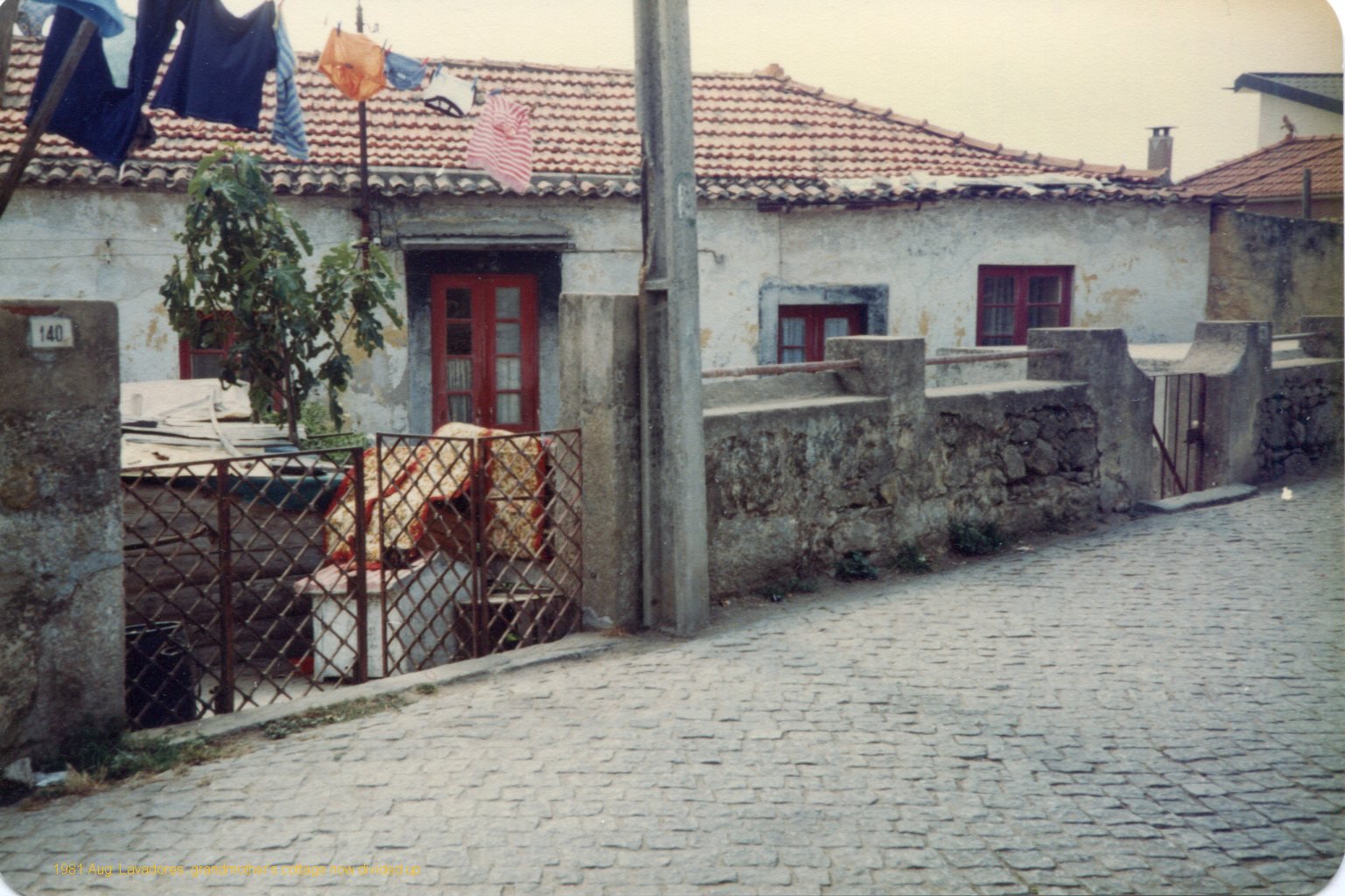
Photo 230 - "Aunt Kate's house on the left, our house on the right". The street or lane is Rua de Estampara de Lavadores, now a somewhat run down part of old Lavadores. Kate's house has been altered but is still standing; the 'Rawes' house opposite, is now enclosed by a high wall and trees and is called 'Casa Clotilde Fonseca'.
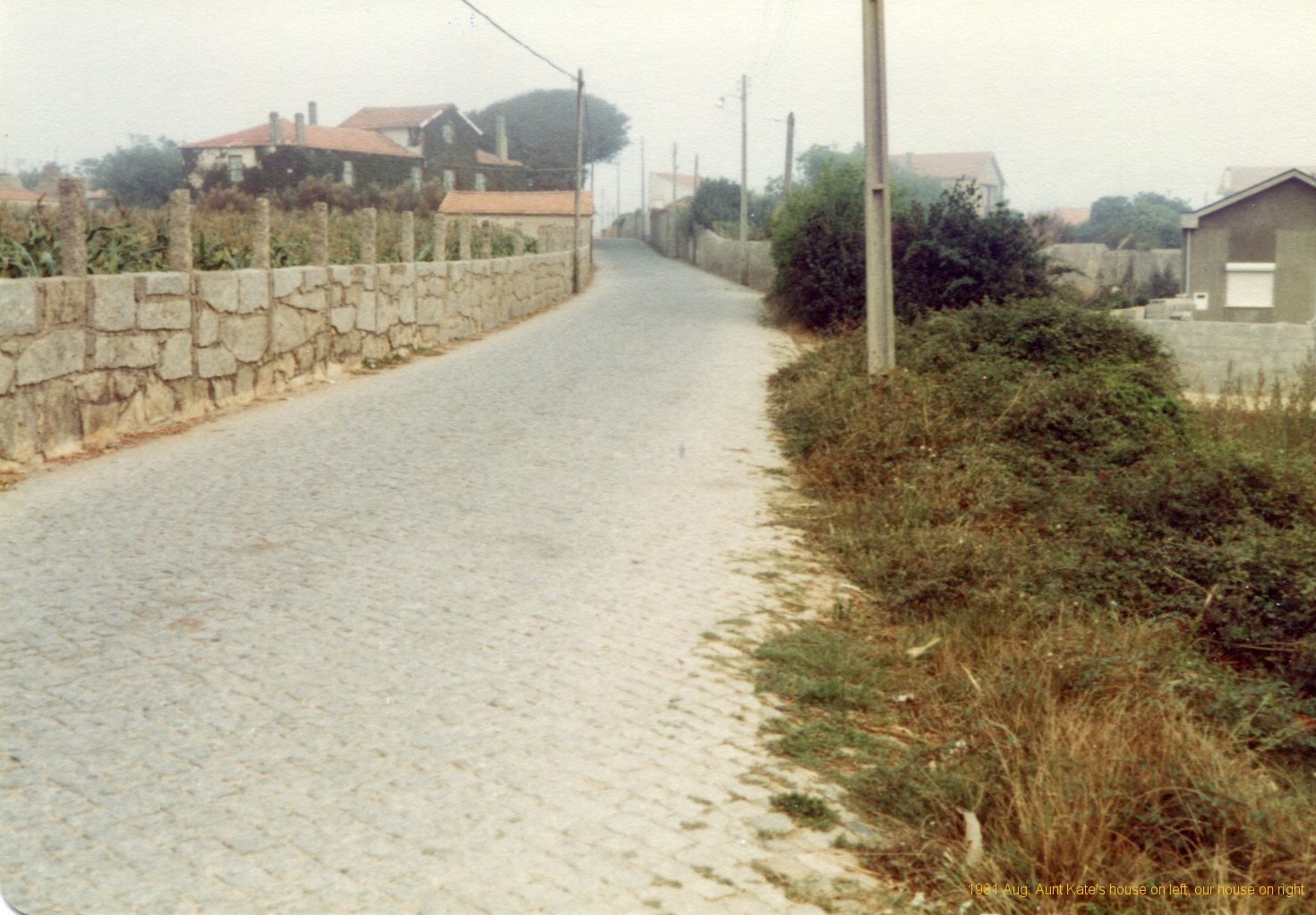
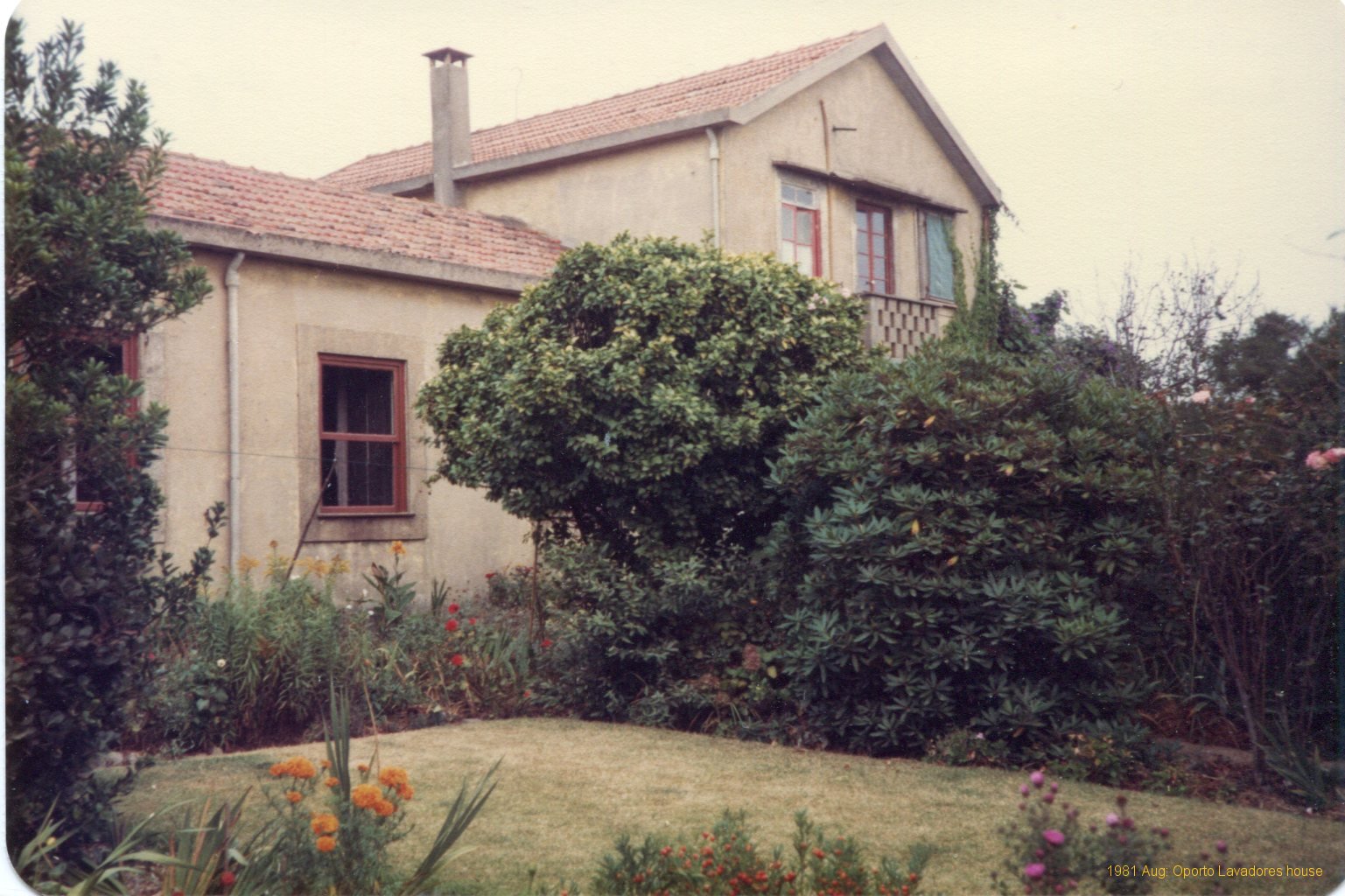
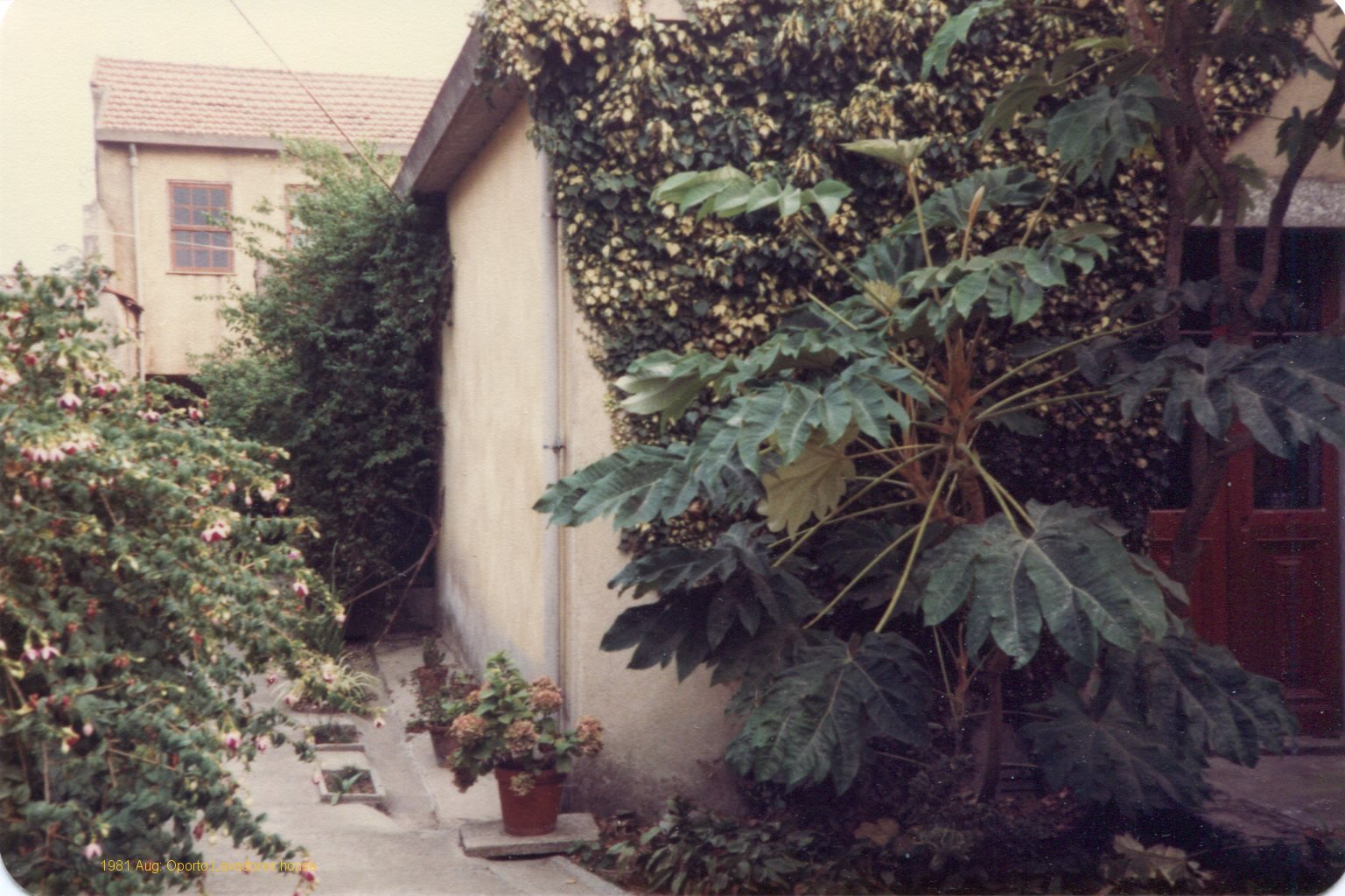
Photo 234 & 235 - "Flower's house (formerly Roope's) with grandmother's house on left". The Flower's house still exists, although greatly altered. The house is situated at the end of the Rua de Bélgica; Susanna's house on the left is still existing, although much altered. In between the two houses is the end of the Rua de Bélgica.
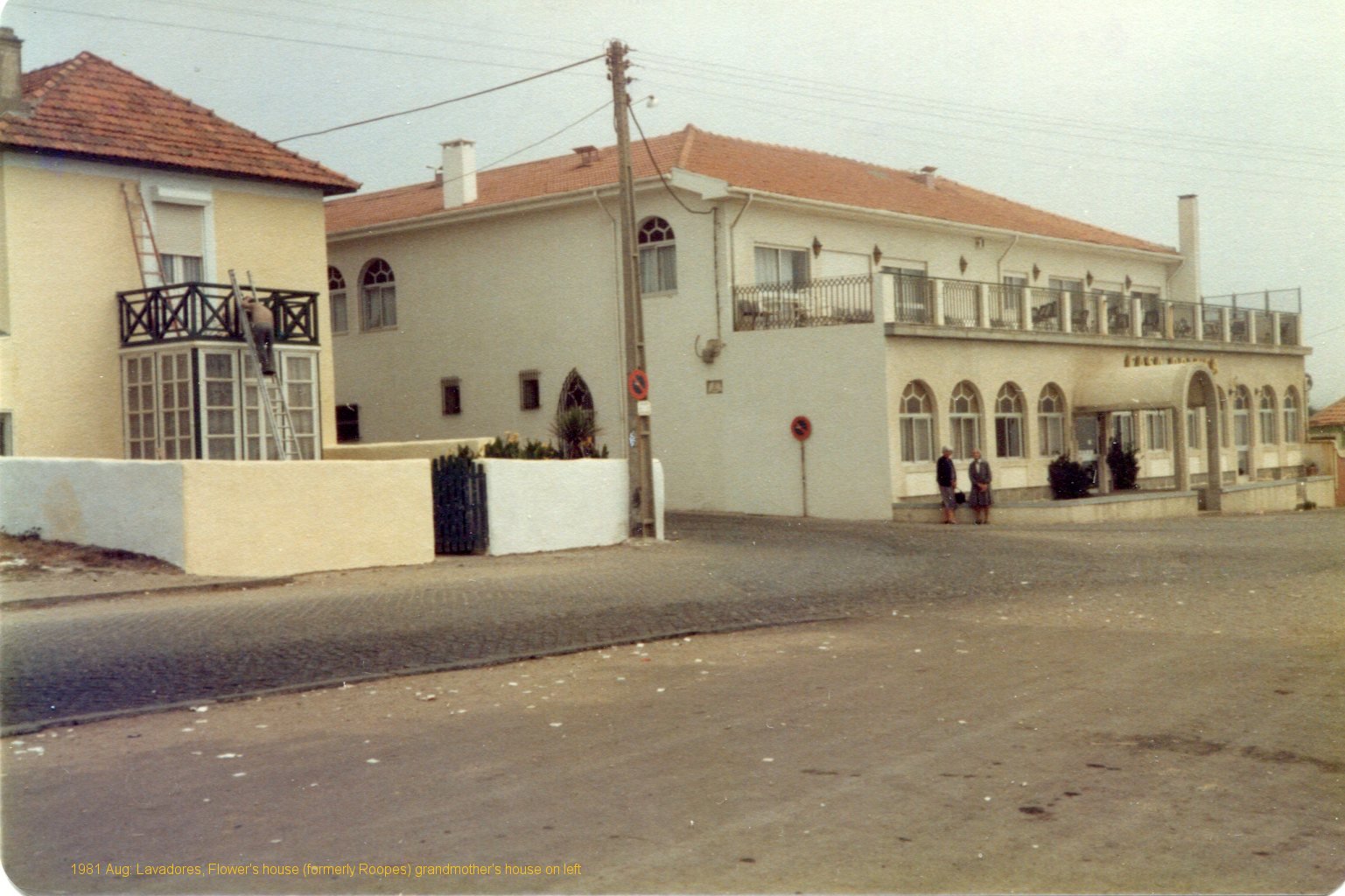
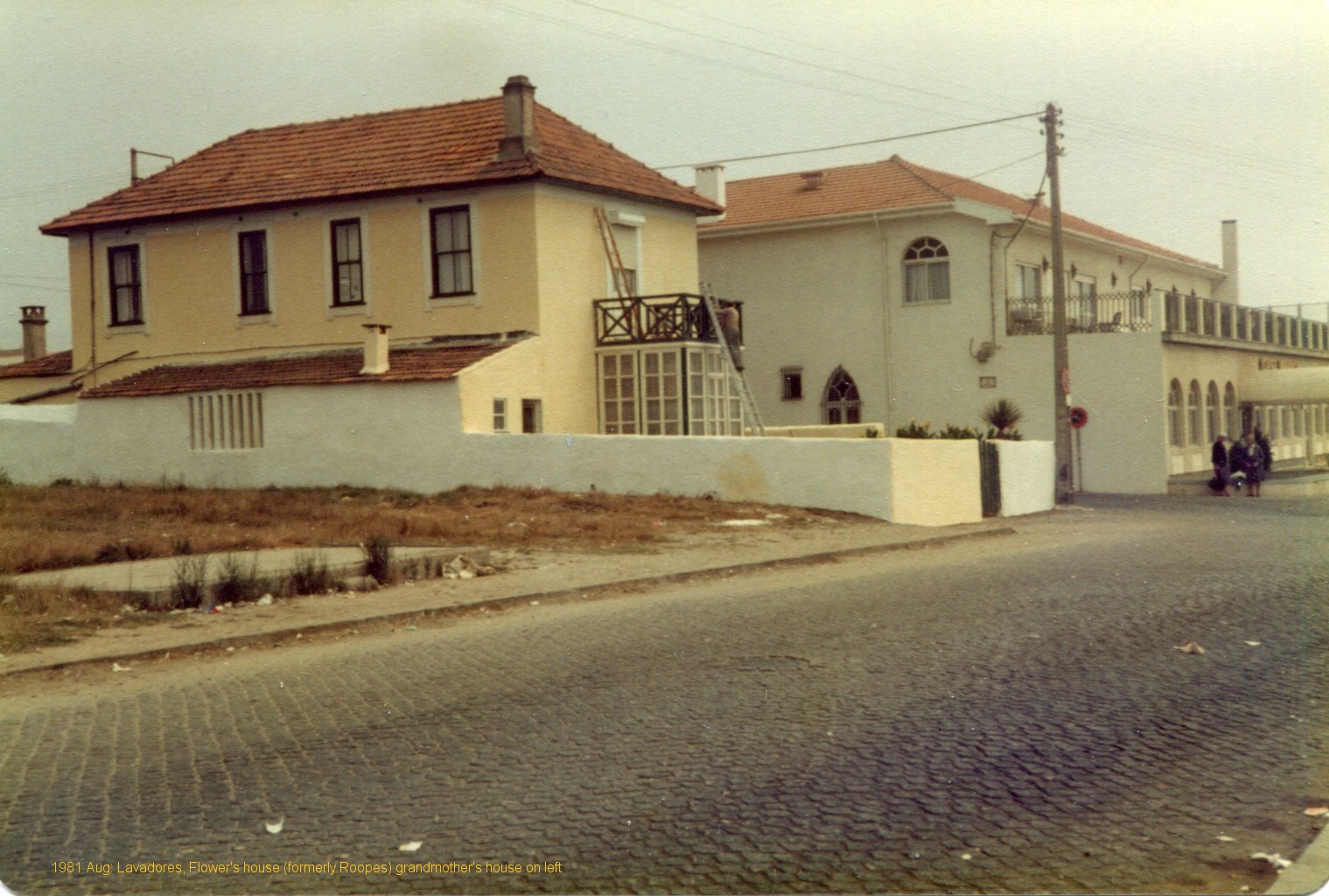 Susanna's house and the Flowers house with Barbara Rawes and Beryl Yeatman standing on the corner.
On the 16th May 1983, my father and Barbara (my step-mother) visited Beryl and Tina Yeatman in their house in Vila Nova de Gaia, the Quinta da Boeira (near the Rua do Conselheiro and the Boeira Garden Hotel). The Yeatman's were close friends of Susanna and owned the Quinta da Vargellas at Pinhão on the Douro and controlled the Taylor's wine firm. Arthur Dagge's sister Helen had married Frank Yeatman. 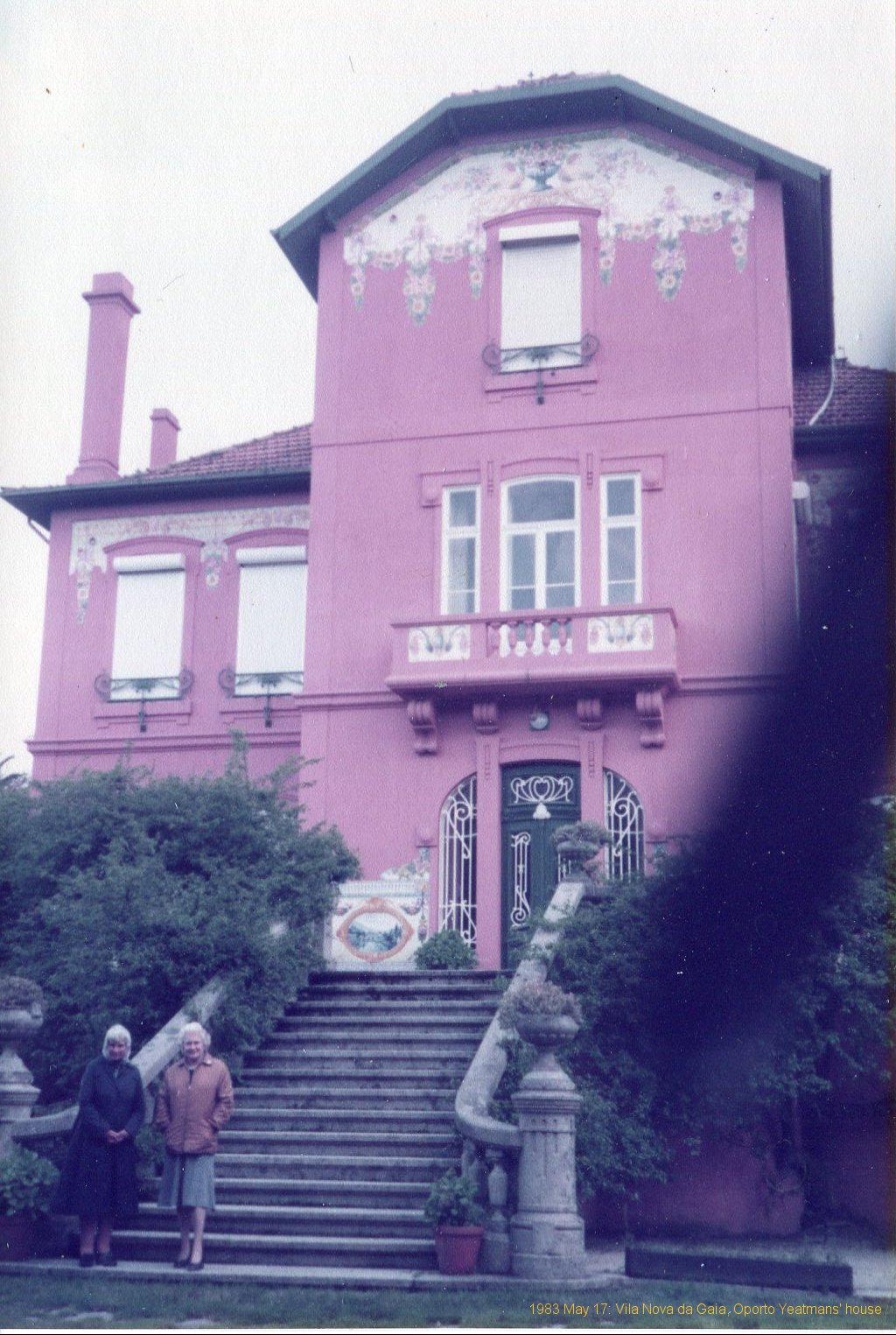
245 - the Yeatman house in Vila Nova de Gaia with Barbara Rawes & Beryl Yeatman.
Where does Afife fit in?
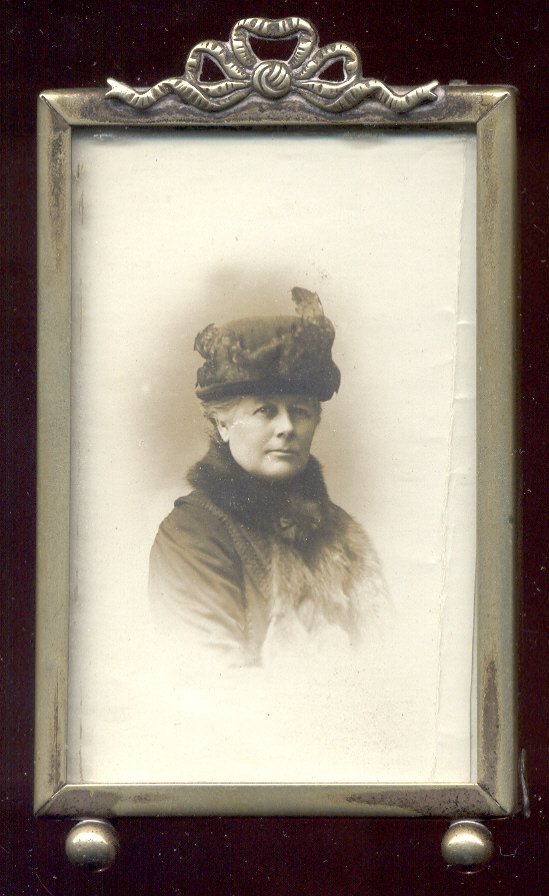
Susanna later in life. Susanna Roope Dockery died on 20th September 1927 at Frank Yeatman's house Quinta da Boeira in Vila Nova de Gaia and was buried in the English Cemetery in Oporto.
|
|||
| Where Susanna lived and where she visited in Portugal. | |||
|
Most of Susanna's paintings and sketches are not located or dated. The identification of the scenes of her paintings, after so much time, has proved difficult, but the process of that identification has helped us to build up a picture of her movements, her bases and travels in Portugal. The location of these scenes, extend from the Lisbon area all the way up to Caminha on the border with Spain. Because of the factual quality of her paintings and their subjects, we have made much progress tracking the tricky problem of where she painted. Even more of a problem is when she painted them.
This is an attempt to record both where Susanna painted her subjects. After she had separated from her husband Victor Dockery in 1891, her career started back in Surrey, where she lived with her mother and there are two of three of her paintings that relate to her stay there. Her base was living with her mother in Surrey from 1891 until probably when her mother died in 1902. A lot of Susanna's work dates from the 1890s when she made frequent trips to Portugal. While there, she would have stayed with her extended family. Her movements then becomes more vague.
Lisbon
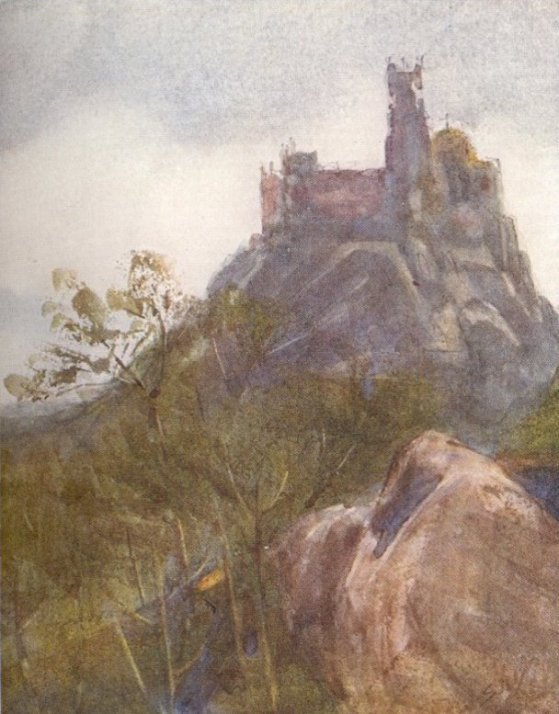
Nazaré
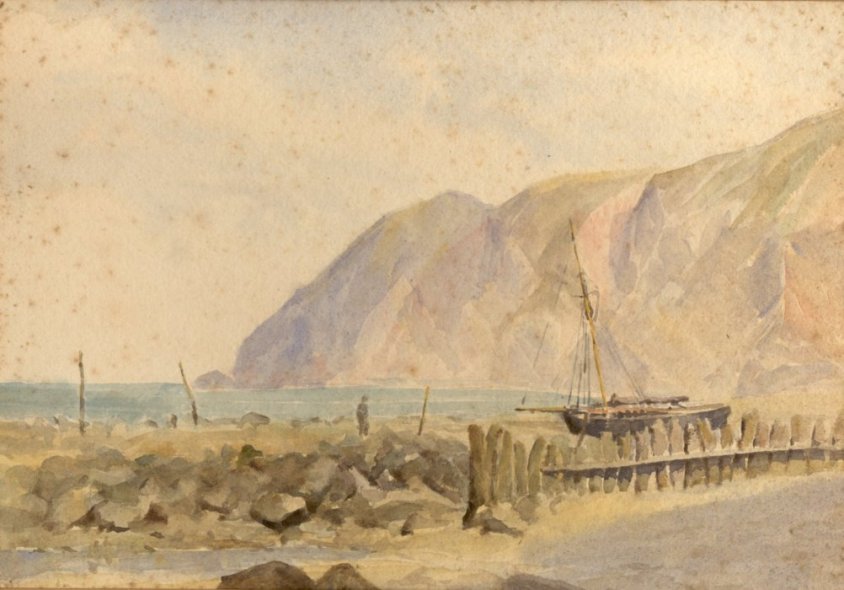
Espinho
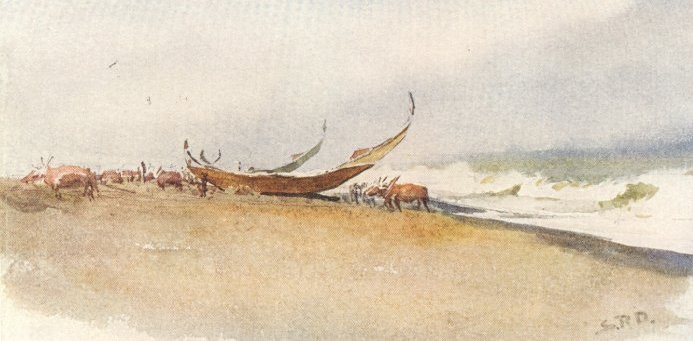
Lavadores
Vila Nova de Gaia
Oporto
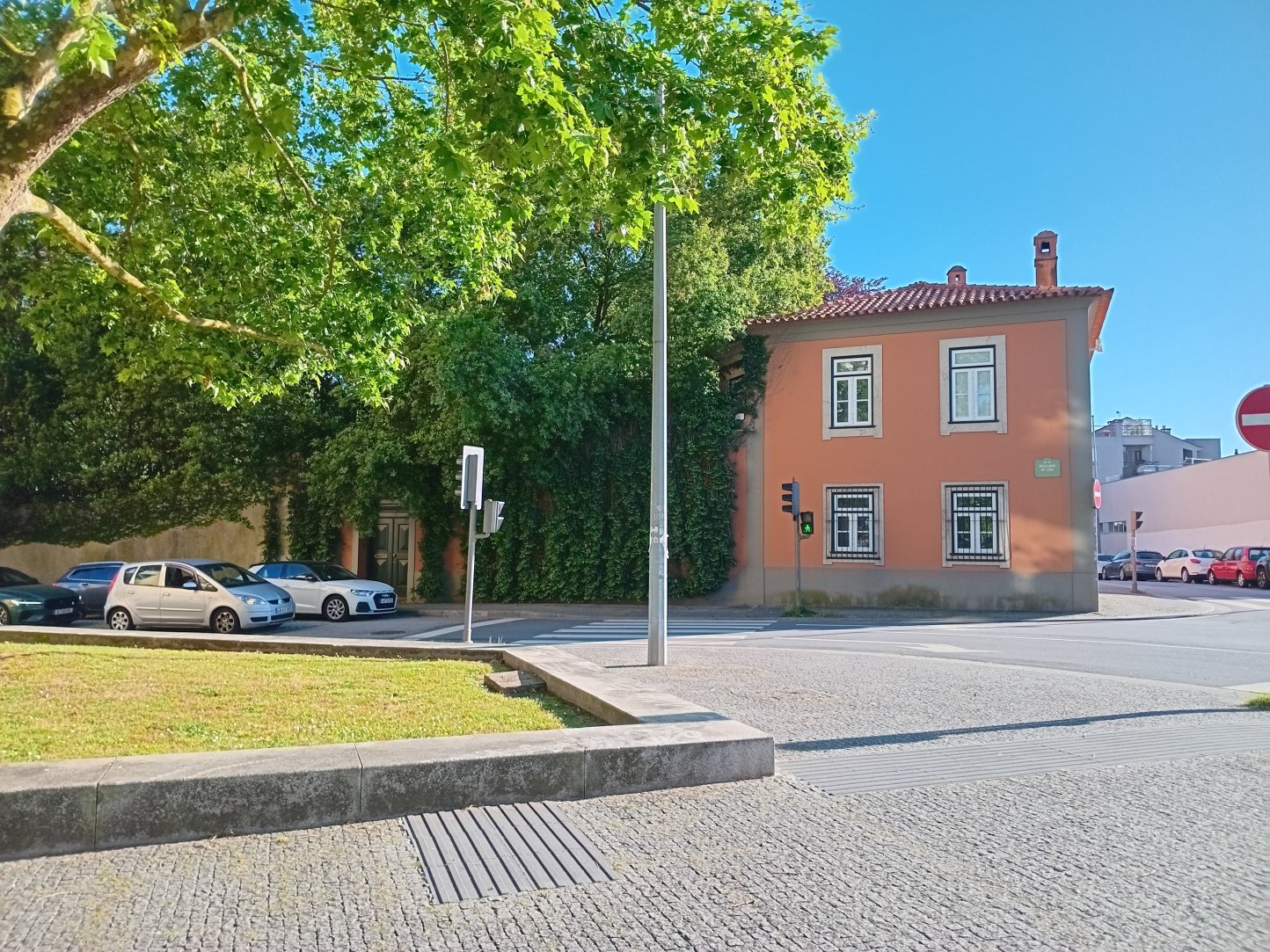
The Douro and the Quinta de Eira Velha
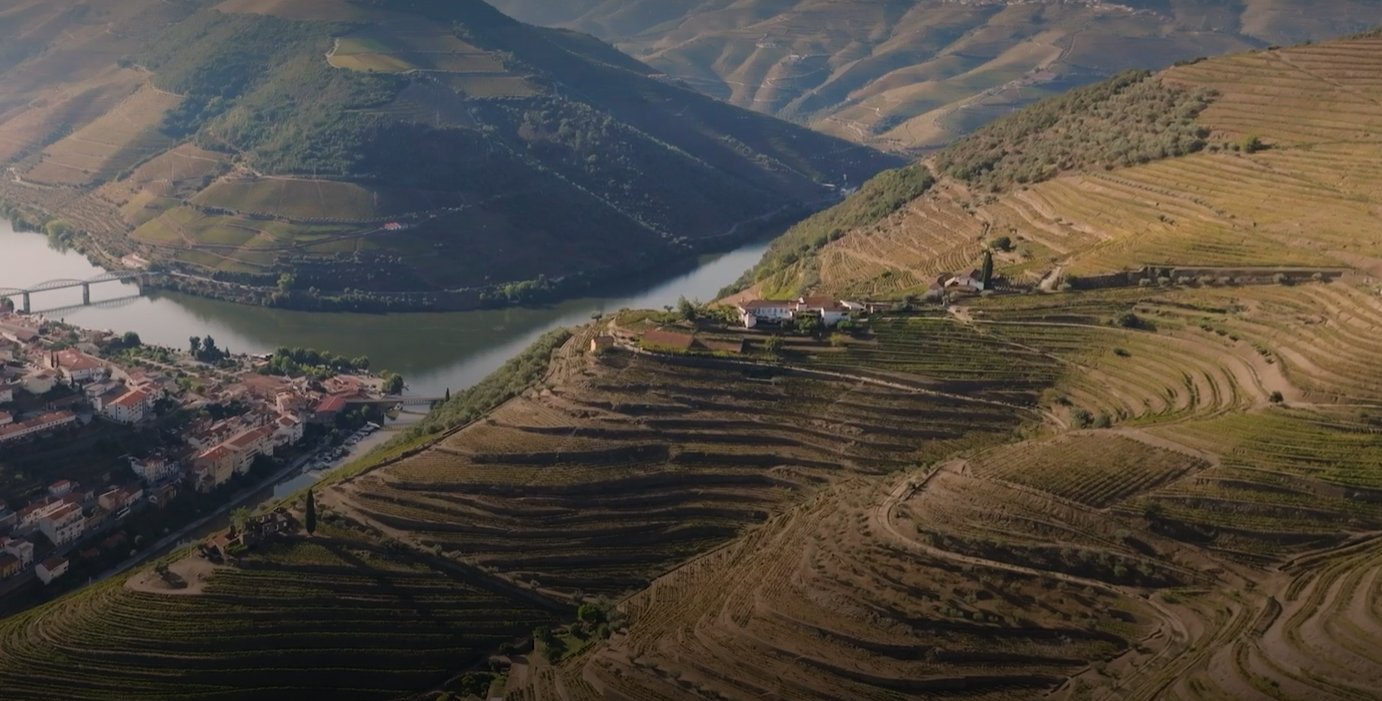
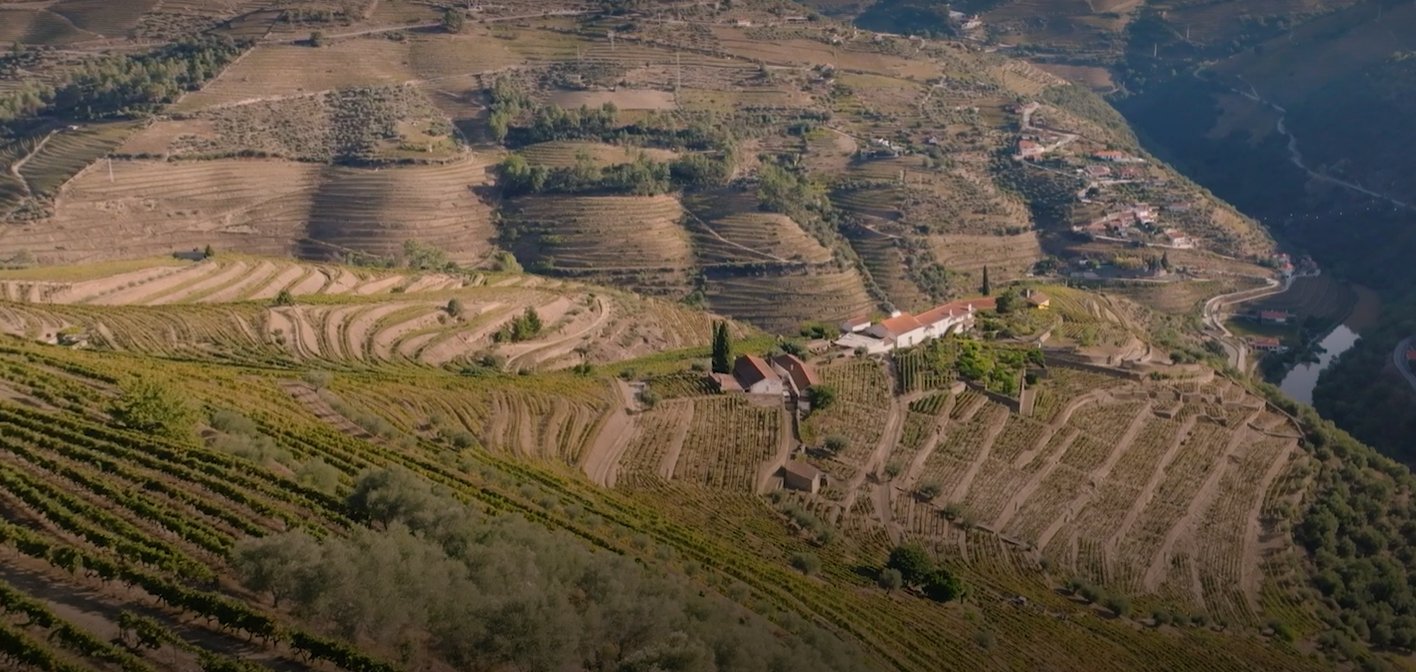
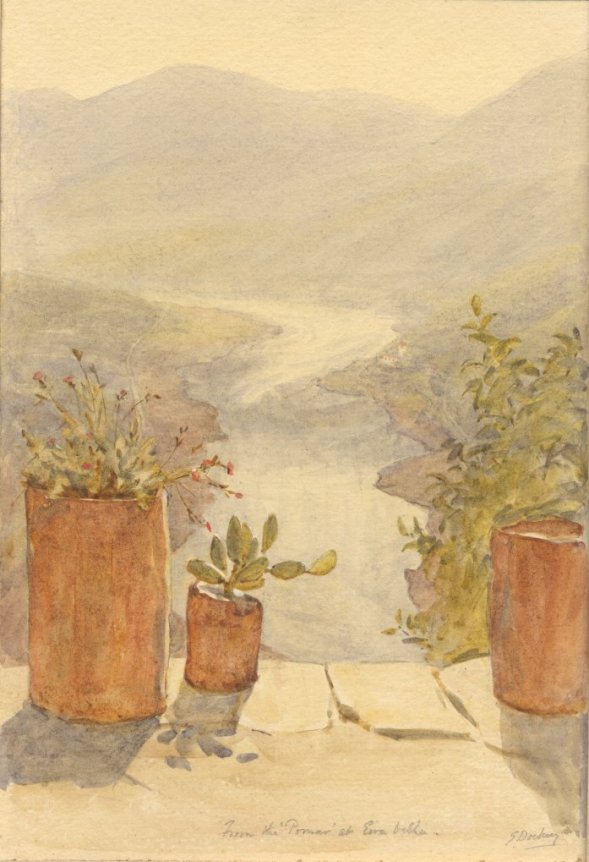 Susanna's painting of the view from the quinta. Eira Velha is one of the oldest quintas in the area and commands magnificent views across the Douro Valley and Pinhão far below. The name Eira Velha literally means old threshing floor and the first record of it is back in the medieval period. A history of the quinta is to be found in Port Wine Quintas of the Douro by Alex Liddell, Quetzal Editores, Lisboa, 1992. Hunt, Roope & Co. had traded with the owners of Eira Velha from 1809 and had made wine on the quinta from 1828. It was in 1893 however that Hunt, Roope and Co. purchased the property. Eira Velha was increased the size of the estate by addition of adjacent areas of land/farmsteads, Fraga de Baixo in 1901 and Sagrado in 1904. This mention of the name Sagrado is important to us as "The road to Sagrado" is mentioned on two of Susanna's paintings and its location was hard to pin down. In, or around 1906, Cabel's sister Kate married Arthur Dagge. In 1907, Eira Velha, along with other property, was transferred to Susanna's brother Cabel Roope III (The Story of Hunt, Roope & Co.). Cabel was well-known, colourful and well-liked character in Oporto, he was a confirmed bachelor and drinker. Arthur Dagge worked at some stage for Van Zellers and then for the Taylor's port wine firm, which was run by the Yeatman family (Different Worlds. It is not known when Arthur Dagge became manager of Eira Vehla. Cabel retired in 1907 and upon Cabel's death in 1911, the share capital of Eira Velha passed to Arthur Dagge. Cabel left most of his estate to including Eira Velha, to his infant nephew Frederick Cabel Roope. During FC's minority, Arthur Dagge and Arthur Standring (who had married Cabel's sister Ellen), were appointed as executors and managers of Eira Velha and the rest of his estate, although Arthur Dagge probably took the leading role.
Family of Arthur Dagge
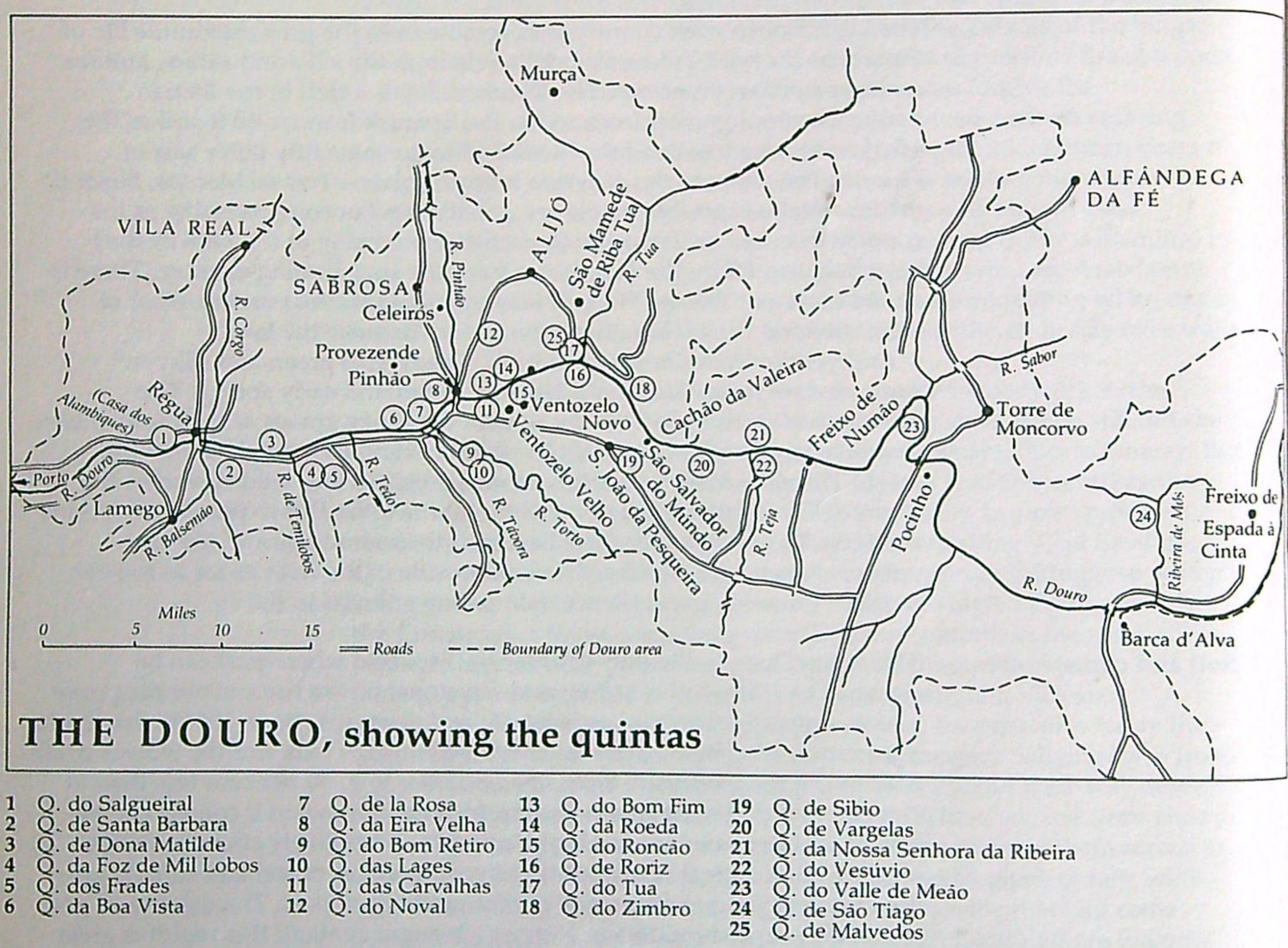 Map of the Douro Quintas from The Story of Port by Sarah Bradford. It is believed that sometime after, Arthur Dagge improved the road up to the quinta at his own expence. In the 1880s–1890s, the road system around Pinhão was being improved. This however did not include the lengthy mule track or bridle-path that wound its way up from the valley floor to Eira Velha and beyond. There is a delightful story concerning this:- "The beautiful quinta of Eira Velha, perched upon a shoulder of the hills overlooking the Pinhão valley, could for many years only be approached by the roughest of bridle-paths. Arthur Dagge had long wished to build up to the house from the main highway in the valley, but his requests were invariably turned down by the Juiz dos Orfãos in view of the fact that the young Cabel Roope was both a minor and an orphan (Cabel Roope had died by then). Dagge at last took desperate measures. He built the road and then invited the learned judge - who came from far afield - to visit the quinta with his wife. The two arrived at Pinhão one dark evening, and were led up the bridle-path on donkeys, the donkey-boys having been instructed to make the journey as uncomfortable and frightening as possible. Next morning, when the time came for the judge and his wife to leave. a taxi was waiting to drive them down to the train. Not a word was said, either then or ever again, upon the subject of the road."
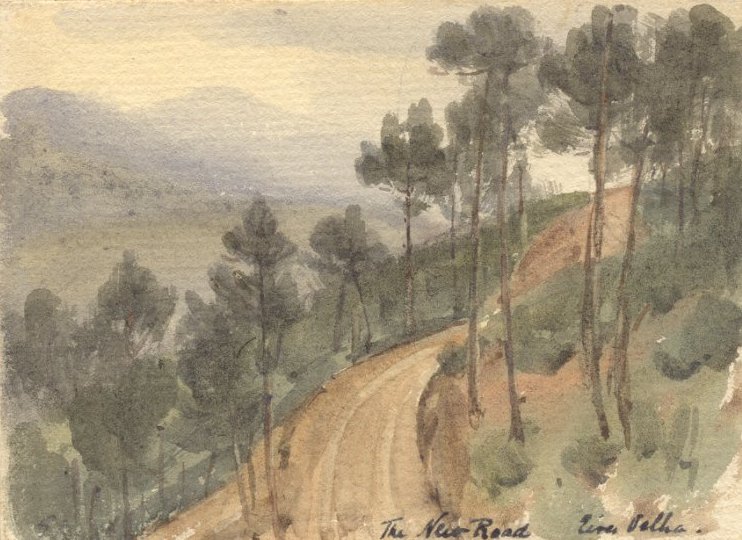 Painting srd311 depicts the new road with Susanna's title "New Road at Eira Velha". The alignment is still used today. In Port Wine Quintas of the Douro by Alex Liddell, p. 108, it states that Arthur Dagge, was also involved with Quinta do Roeda, from 1921 to 1927 and had apparently managed the re-building of its adega. The Quinta do Roeda is situated near to the Douro to the east of Pinhão. This is the only reference found that supports that Arthur was involved in Roeda. Both and Susanna and Arthur passed away in 1927, within three months of each other and they are buried in a family plot in the English Cemetery in Oporto. Hunt, Roope & Co. was sold to Ferreirra in 1956. Frederick Cabel Roope's son Noel Cabel Roope remembers visiting the quinta on two occasions, the first being just after WW2 when Noel was 7 or 8. He remembers vividly going on to a balcony with nearby orange and lemon trees laden with fruit. On his second trip in 2015, he remembers it as being sadly neglected. It 2026 it is a fully a functioning quinta owned by Taylor Fladgate Port.
Susanna's Time at Eira Velha The quinta was not just a house, a place to live, it was a working farm and surrounding it was the adega (farm buildings), the working part of the quinta the buildings housing the presses, grape harvesting machinery etc. are positioned. It is now realised that Susanna's depictions of the wine producing process were set inside a building or buildings were painted here. Susanna also spent much time on the roads leading to and from the house, along the vine terraces and amongst the olive groves, sitting or standing quietly as she sketched and painted her many paintings.
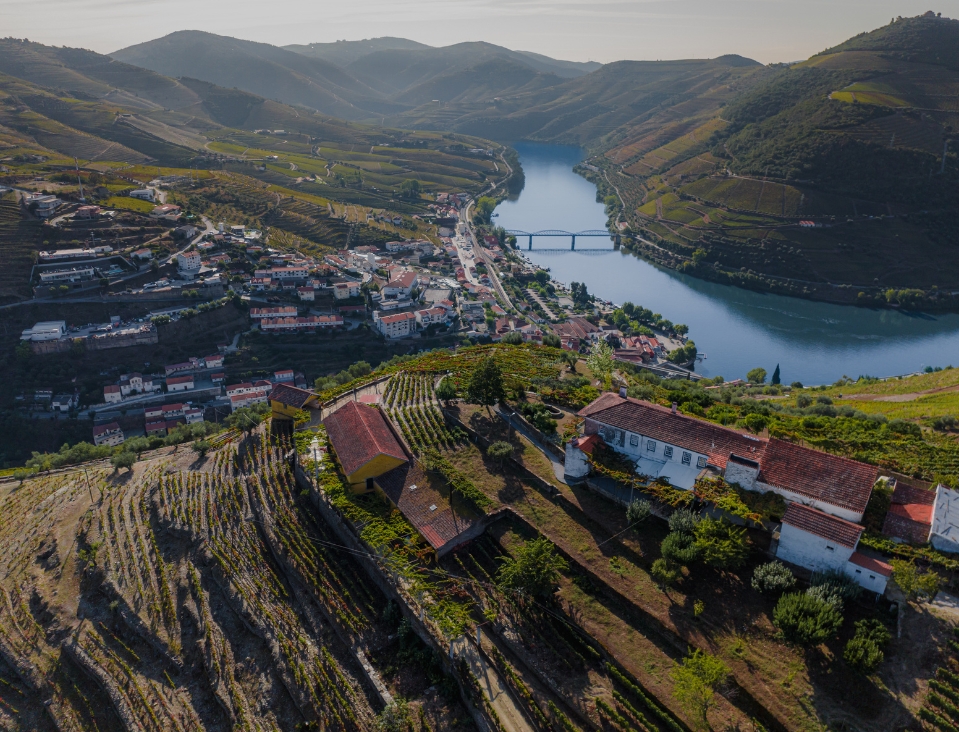
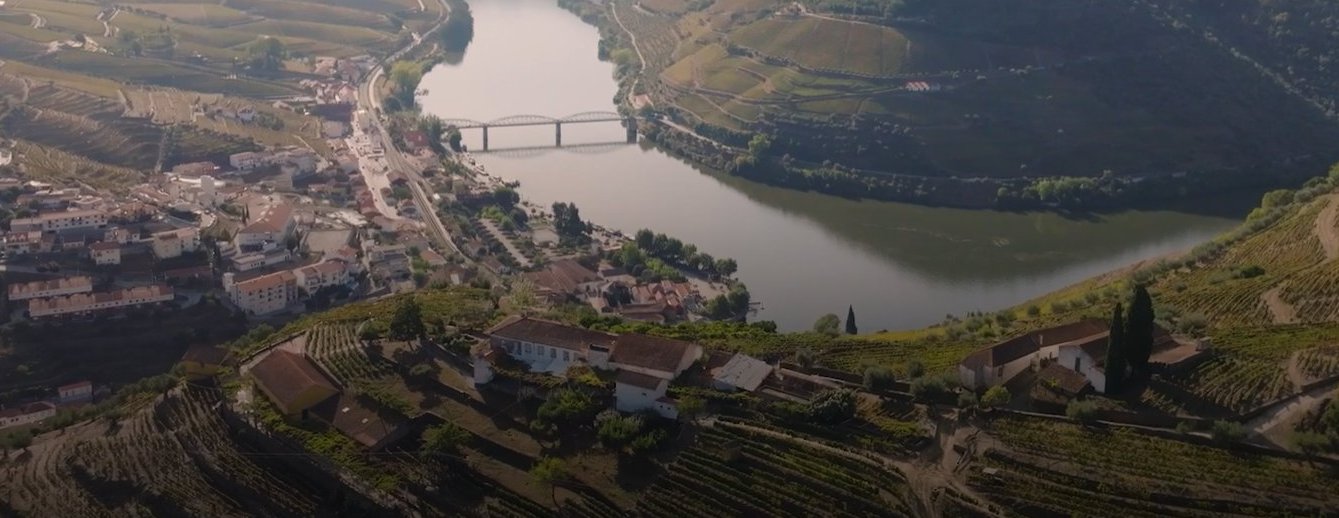 Images extracted from the Taylor's Port website.
The wine-making process at Eira Velha.
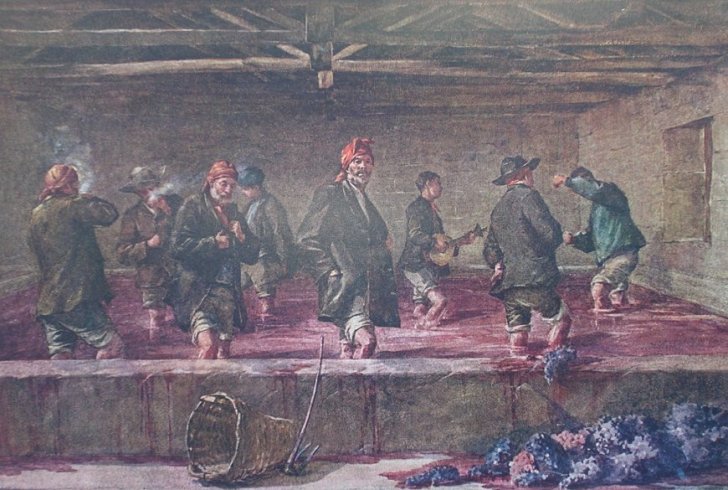 The above painting, published in Portugal: Its Land and People, in 1909, is one of Susanna’s most vivid and character‑rich depictions of pressing the grapes (pisar uvas) inside the lagar. The deep burgundy‑red must (freshly crushed grape juice containing skins, seeds and stems), forms the base of the composition, but the true brilliance of the painting lies in the depiction of the men themselves, each caught in a different gesture, as if she had pressed the shutter of a camera - a moment of life frozen in time, Susanna is not painting anonymous workers, she is painting individuals: Two men are smoking, relaxed, utterly at ease, their pipes or cigarettes held casually as they tread, their presence gives the scene a social, almost convivial atmosphere; a man is holding what is probably a banjo, adding the likelihood of music to the scene; a man with his hand behind him, is possibly dancing, his posture is light, almost playful, suggesting a rhythmic movement - Douro workers traditionally sang and moved in coordinated steps - and Susanna may be capturing a moment of that rhythm. Another man is holding his hands up - perhaps gesturing to a companion, perhaps caught mid‑conversation, perhaps reacting to Susanna herself; and then there is the man looking directly at her - this is the most extraordinary detail, he meets her gaze with complete immediacy, as if posing for a photograph. His expression is alert, curious, and slightly amused. This single glance anchors the entire painting in lived reality. Why this painting matters is because it is not simply a record of treading grapes, it is a record of human presence, movement, humour, and labour. Susanna captures the camaraderie of the adega - men working, talking, smoking, gesturing, laughing, and acknowledging her presence. It is one of her most remarkable achievements: a moment of Douro life preserved with photographic immediacy, a record of times past and now lost to us. We finish off with the end process; the work is done and the product is ready for testing. In the meditative painting below is a lone man sitting by the lagar holding what appears to be a tester.
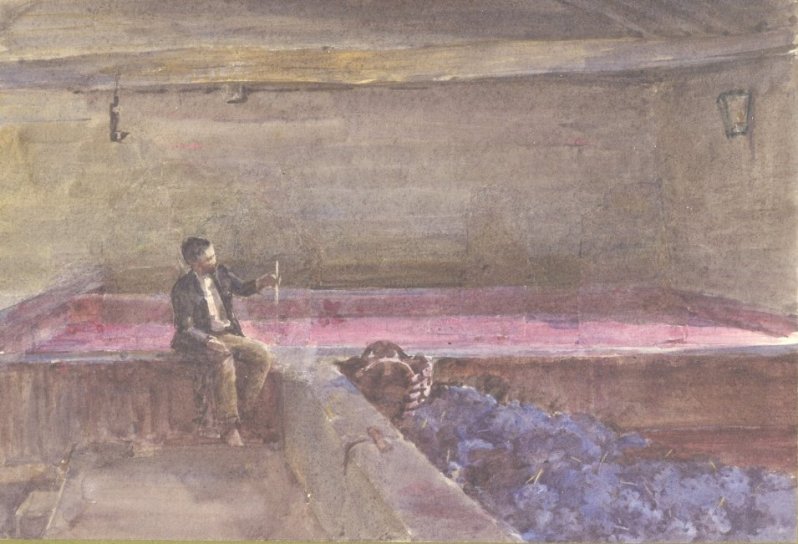 The man appears to be young, his clothing and confident handling of the tester imply someone with responsibility in the adega, and it is entirely possible that Susanna has painted her brother-in-law Arthur Dagge, Manager of Eira Velha.
Braga & Barcelos
Viana do Castelo
Afife
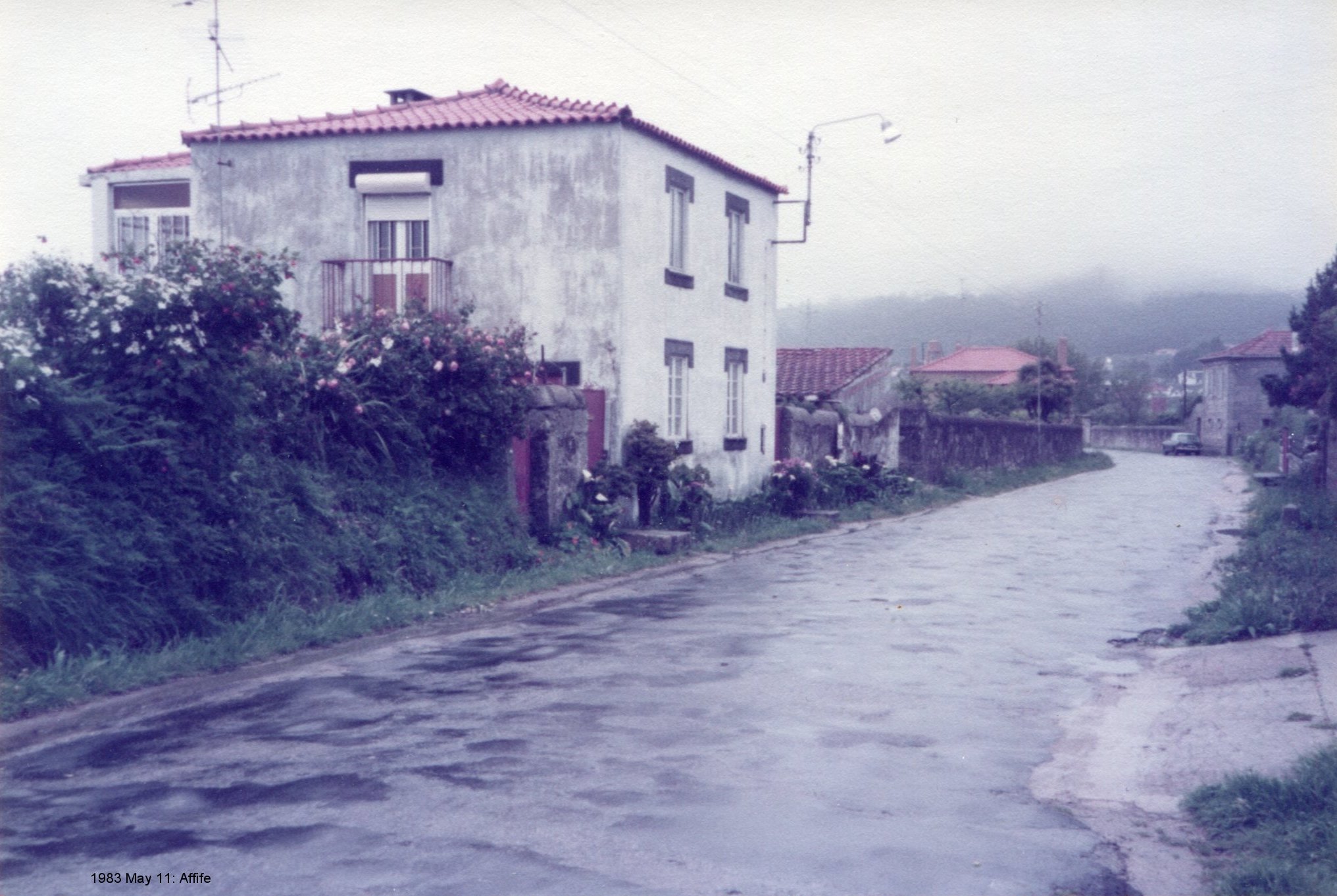
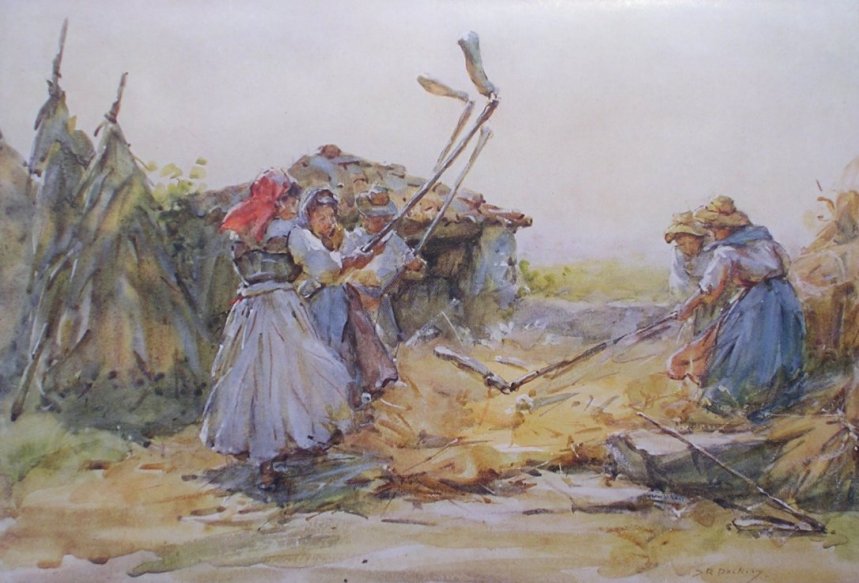
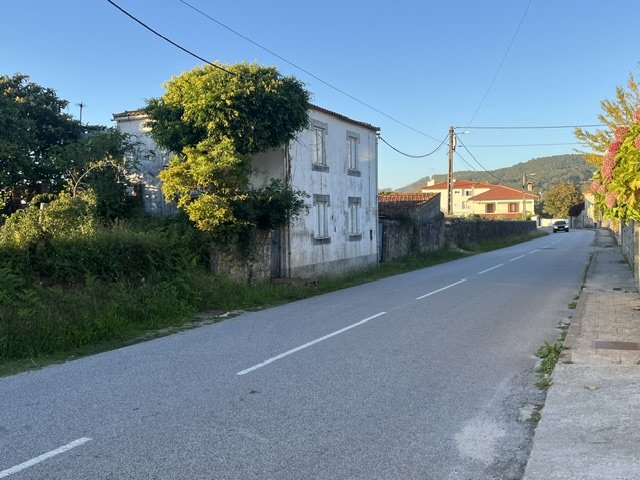 Susanna's assumed cottage on main road in Afife. 1/ taken in 1983 by Bernard Rawes; 2/ taken in 2026 by Gareth Maeer. There are many scenes from in and around Afife, but her main attention appears to be the home industry of the women and agrarian studies in the wheat and corn fields between the village and the sea. This is not to diminish the importance of her paintings of local churches, shrines, wells, countryside crosses etc.
Ancora

Caminha and Coura
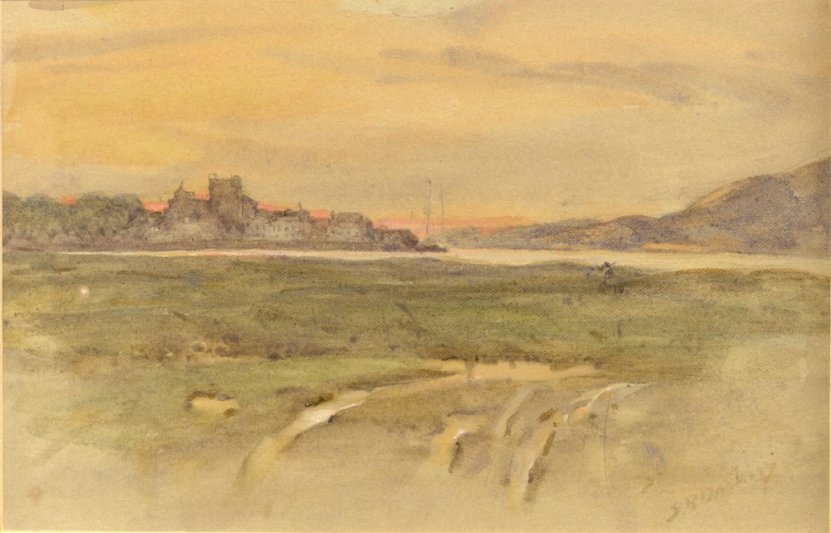
Julian Rawes, Crooked Walls, Harvington, 2026.
|